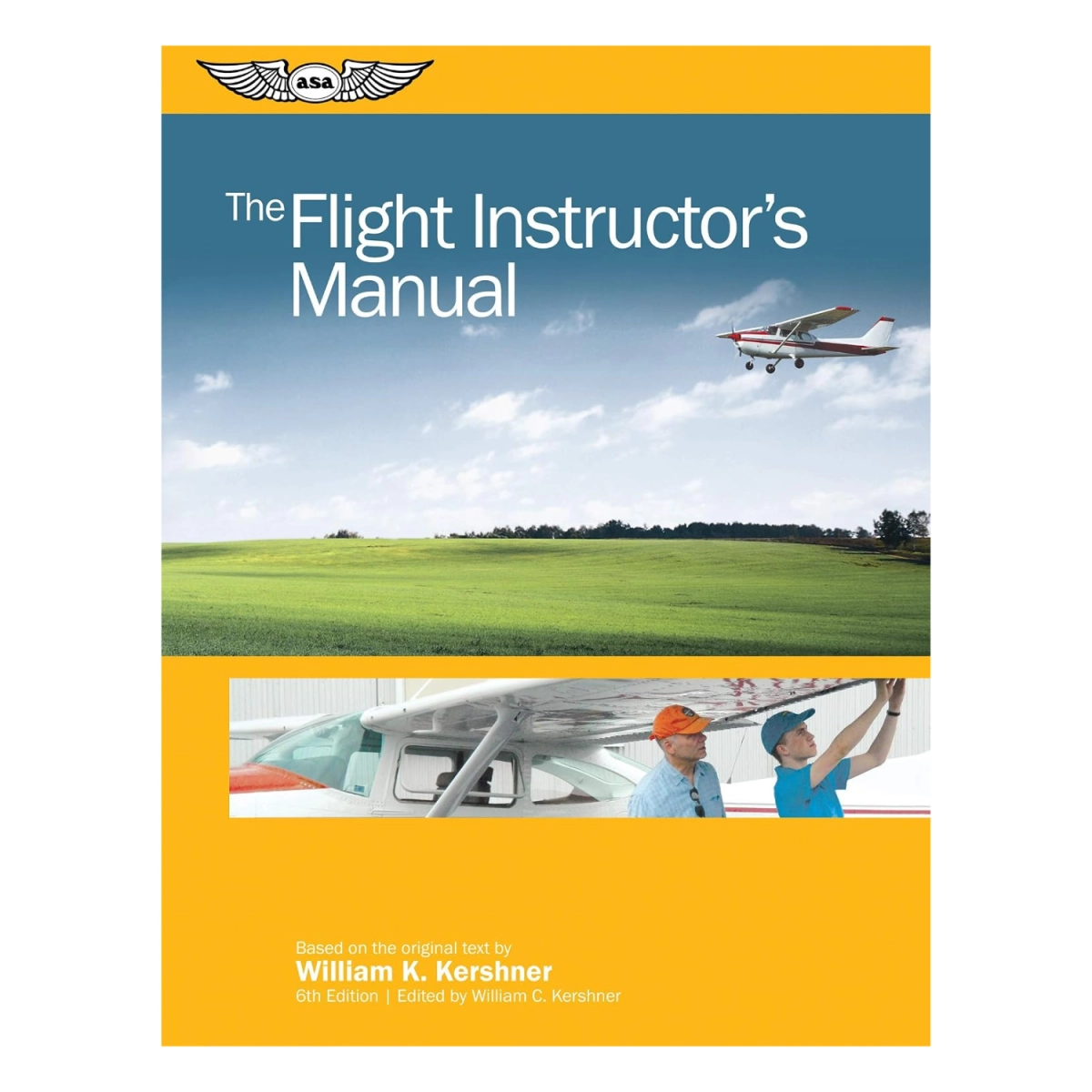
The authoritative teaching handbook for every certified flight instructor and pilot titled The Flight Instructor's Manual is an indispensable instructional reference. Originally authored by William K. Kershner and updated by editor William C. Kershner, it is presented in its revised 6th Edition. Published by Aviation Supplies & Academics (ASA) on February 20, 2018, it bears catalog code ASA-FM-CFI-6 along with standard identifiers ISBN-13 978-1619546134 and ISBN-10 1619546132. This educational work establishes high instructional standards across the global aviation industry.
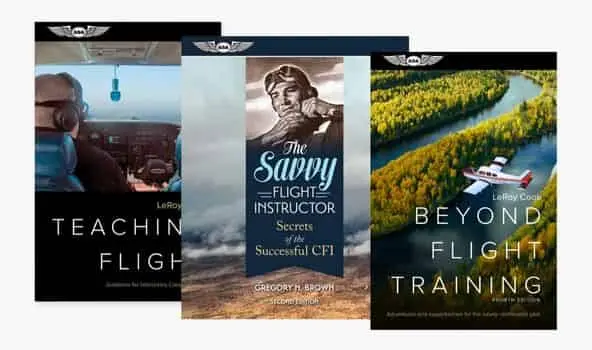
The textbook serves candidates preparing for the Certified Flight Instructor (CFI) checkride as well as active mentors. Each chapter operates as an independent guide focusing on specific flight training phases. Initial modules address the Fundamentals of Instruction (FOI), adult learning psychology, and lesson structure. The guide covers presolo training through private pilot certification requirements. Instructors learn systematic techniques for visual flight in complex single-engine and light twin-engine aircraft. These structured habits build navigational discipline during cross-country air navigation. Systematic flight instruction reduces cockpit errors and ensures standardized workflows across scheduled air transport. To find complementary instructional manuals, ground school syllabi, and teaching aids, check our comprehensive selection of flight instructor training manuals and aviation education books for the pilot.
The curriculum features a complete spin training syllabus, introductory aerobatics, and instrument flight instruction (IFR). It delivers practical guidelines for ground school lessons, foreign student management, and practical test scheduling. Through these structured lessons, every ground instructor, flight examiner, and airline pilot establishes safe flying practices before each instructional flight. This disciplined framework instills the foundational values required across professional aeronautics.
The textbook contains 560 pages filled with step-by-step illustrations, sample briefings, and structured syllabi. It is printed in an expansive format measuring 27.94 x 20.96 x 2.54 cm with a solid weight of 1.23 kg (2.7 lbs). Bound in a resilient trade paperback (softcover) cover designed for daily flight school reference, this English-language manual remains an essential training staple in worldwide aviation.
Features of The Flight Instructor's Manual
- 📖 Full Title: The Flight Instructor's Manual (The Flight Manuals Series)
- ✍️ Author & Editor: Written by William K. Kershner; edited by William C. Kershner
- 🏛️ Publisher: Aviation Supplies & Academics (ASA)
- 🔢 Product Identifiers: ASA Code: ASA-FM-CFI-6 | ISBN-13: 978-1619546134 | ISBN-10: 1619546132
- 📅 Edition & Date: Updated 6th Edition, published on February 20, 2018
- 📄 Extent: 560 technical pages including detailed instructional schematics
- 📐 Dimensions & Weight: 27.94 × 20.96 × 2.54 cm weighing approximately 1.23 kg (2.7 lbs)
- 🛡️ Binding Style: Durable softcover / Trade Paperback for continuous ground school study
- 🧠 Educational Principles: Fundamentals of Instructing (FOI) and adult student learning models
- ✈️ Flight Phases: Presolo flight training, private pilot curriculum, complex singles, and light twins
- 🔄 Specialized Modules: Dedicated spin recovery syllabus, basic aerobatics, and IFR instruction
- 🏢 Flight School Administration: Ground school management, foreign student guidance, and practical test tracking
- 🌍 Language: English technical standard
Frequently Asked Questions (FAQs)
Who is The Flight Instructor's Manual primarily written for?
It is designed for FAA CFI certificate candidates and experienced instructors mentoring each student pilot in civil aviation.
Does the book include procedures for high-risk maneuvers like spins?
Yes, it provides a dedicated spin syllabus and recovery steps to maintain positive aircraft control on every training flight.