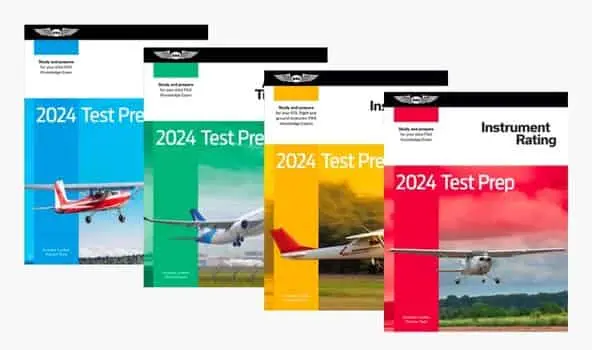
The advanced instrument flight training manual for every professional pilot titled Instrument Procedures Handbook is an essential technical guide. It was developed by the Federal Aviation Administration (FAA) under official reference FAA-H-8083-16B, superseding the previous 16A version. The commercial print edition is published by Aviation Supplies & Academics, Inc. (ASA), with an official effective date of October 2017 and commercial release in December 2017. This handbook establishes rigorous operational standards across the international aviation industry.
The volume serves as a comprehensive expansion of the introductory Instrument Flying Handbook. It provides real-world operational guidance to optimize professional operations under Instrument Flight Rules (IFR) within the National Airspace System (NAS). The curriculum covers takeoff weather minimums and departure procedures via SIDs and ODPs. Furthermore, it details en-route navigation, arrival clearances through STARs, and the precise execution of instrument approaches and landings. These protocols sharpen discipline during terminal air navigation. They also reinforce safety margins for high-density air transport fleets. To discover more training handbooks and avionics guides, visit our dedicated collection of flight instrument handbooks and advanced IFR procedures for the pilot.
The manual places strong emphasis on operational aviation safety. It addresses vital human factors, runway incursion prevention, and proven techniques to avoid Controlled Flight Into Terrain (CFIT). While primarily focused on fixed-wing operations, it includes a dedicated chapter covering unique helicopter instrument procedures. Consequently, it is an indispensable textbook to prepare for the Airline Transport Pilot (ATP) knowledge exam, instrument ratings, and Certified Flight Instructor Instrument (CFII) certificates. Through these lessons, every airline cadet and commercial pilot manages adverse weather, plans complex contingencies during active flight, and masters modern aeronautics.
The volume spans 312 pages printed in full color, containing vector charts, calculation tables, and explanatory diagrams. It measures approximately 27.9 x 21.6 x 1.7 cm with a total weight of roughly 730 grams. Authored in standard international aviation English, this publication stands as an essential technical handbook for flight schools, simulator centers, and serious practitioners of civil aviation.
Features of Instrument Procedures Handbook
- 📖 Full Title: Instrument Procedures Handbook (FAA-H-8083-16B)
- 🏛️ Authoring Agency: Federal Aviation Administration (FAA)
- 🏢 Commercial Publisher: Aviation Supplies & Academics, Inc. (ASA)
- 🔢 Official FAA Code: FAA-H-8083-16B (Supersedes FAA-H-8083-16A)
- 📅 Effective Date: October 2017 (Published by ASA in December 2017)
- 📄 Extent: 312 full-color pages
- 📐 Physical Dimensions: Approx. 27.9 × 21.6 × 1.7 cm
- ⚖️ Weight: Approximately 730 grams
- 📊 Visual Material: Full-color vector charts, operational graphs, and navigation diagrams
- 🚁 Rotary Section: Dedicated chapter covering helicopter instrument procedures
- 🎓 Certification Support: Prepares for Instrument Rating, CFII, and ATP practical and written exams
- 🌍 Language: Technical aviation English
Frequently Asked Questions (FAQs)
Who is the intended audience for the Instrument Procedures Handbook?
It is written for instrument flight students, CFII instructors, ATP candidates, and every professional pilot operating within IFR aviation.
What operational safety topics are highlighted throughout the manual?
The manual emphasizes runway incursion avoidance, CFIT prevention, and disciplined clearance management during instrument flight.